Kent State Space Mission
A couple of undergraduate friends and I sent up a weather balloon to collect telemetry and footage of the total solar eclipse within the path of totality.
Starting some time in January, as part of a meeting within a math club I attended, a friend of mine, Zaz Brown had tossed around the idea of sending up a weather balloon. During this time, we were to expect a total solar eclipse within Kent on April 8th, and he would liked to have gotten some footage from closer to the stratosphere during the solar eclipse, during this time, we started to get a group of people together to get a project like this off the ground.
In order to successfully get funding, design, build, and execute this plan. We had 4 weeks.
Given the extreme time limitations, and being in the middle of midterns, we first managed to pull off funding by the first week. By the next few weeks. It came down to design, we were limited to keeping the camera below the payload, alongside a lack of high-altitude stabilization due to time constraints. We kept things simple, consisting of an insulated foam payload, inside with the camera's battery, APRS module for tracking, and its own respective battery.
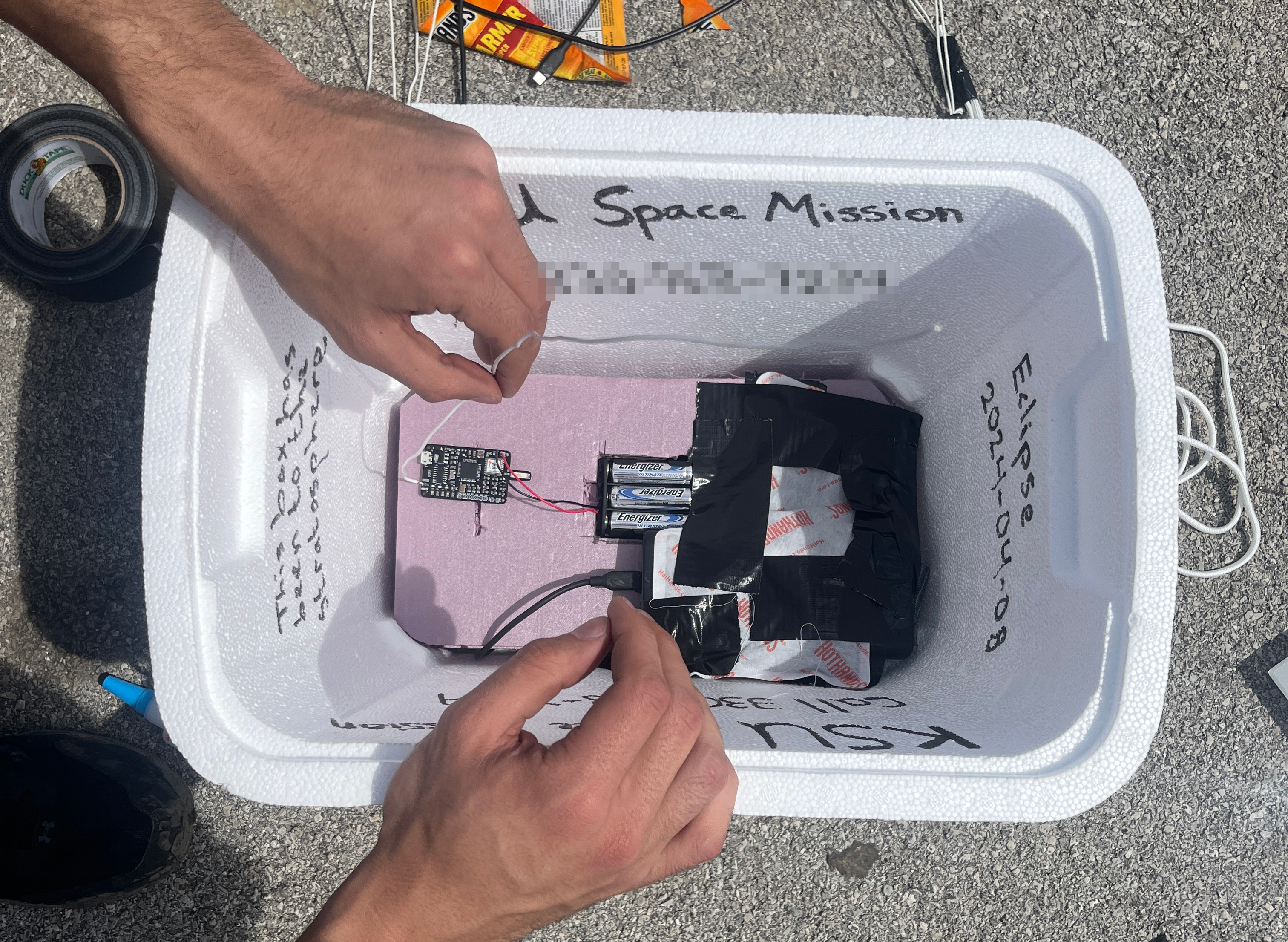
My job consisted largely of making sure that the payload would land in a safe, or at the very least, retrievable location. Which meant finding an optimal spot to release and retrieve. Fortunately this job proved to be quite simple, since a fairly accurate weather model online by Cambridge University did the trick for most weather conditions.
We ultimately ended up choosing our release location to be in a high school parking lot in Tiffin, Ohio. A sparse and largely flat farmland a few hours east of Kent. We arrived early in the morning to set up the payload and get ready to release the balloon. If all went well, we expected the balloon to have landed somewhere in Brunswick, Ohio.
One of the key components to this project was the APRS module, in which we would be able to track where this payload had landed. Which was not ready for the launch until the very last moment. Once we got the balloon up and full of helium, all that was left to do was to sit and watch the eclipse and wait for something to happen.
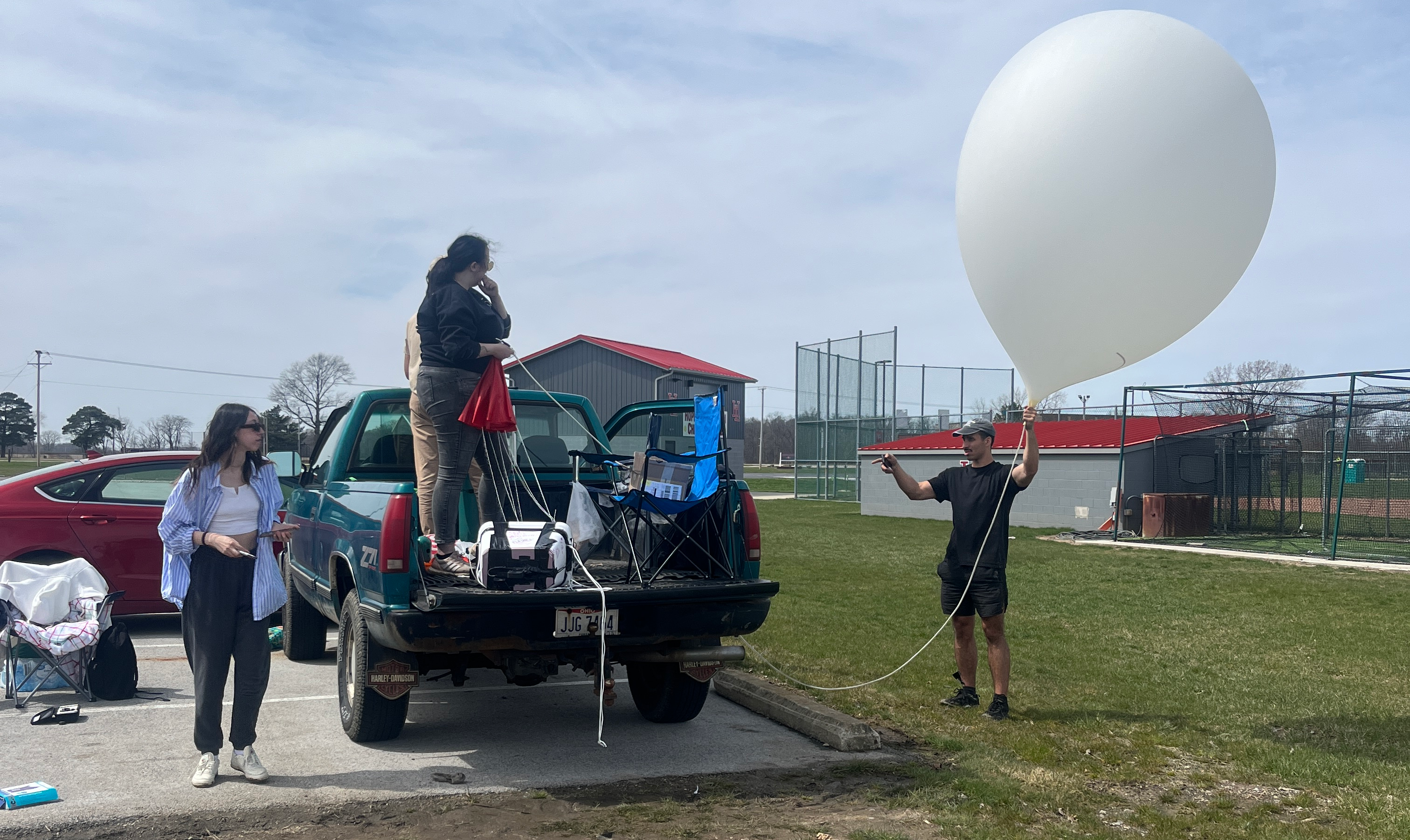
It did not take long to get the first response from the payload in the air, For the next 30 mins, we would follow the coordinates sent from the APRS and try to be in the area of the landing site. We would then spend another 45 minutes looking for the payload, given our flight path.
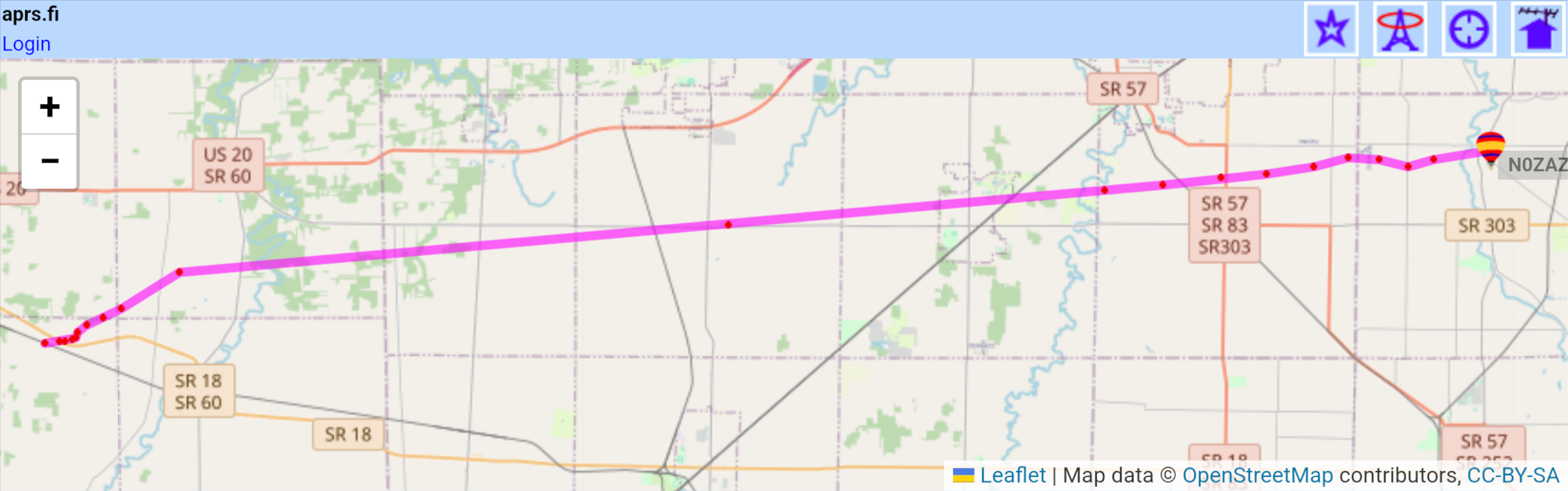 Figure 1.
While the path was as I had about predicted, it was a little shorter than what we had expected, we suspected that this was due to the fact that it was likely that the parachute had not deployed until some time later. As evident by the telemetry, in which you can view in a neat spreadsheet created by Zaz Brown and Nicholas Manousos here.
Of course, we got very fortunate to be able to actually retreive this payload, as it had actually landed in someone's yard, and had left it on their porch. Which yielded the result of being able to share the video of the trip.